


Quick answer
A spermidine supplement is a daily capsule or liquid that gives a clearly declared amount of spermidine, a polyamine found naturally in the body’s cells and in many everyday foods. It is studied for its role in cellular renewal, how cells clear and recycle worn-out parts. It is everyday support for healthy aging, not a medicine.

Key takeaways
- Spermidine is a polyamine found naturally in the body’s cells and in many everyday foods.
- Spermidine is studied for its role in cellular renewal, the process cells use to clear and recycle worn-out parts.
- Spermidine trihydrochloride is a salt form of spermidine that labels name with an exact amount per serving.
- Spermine and spermidine are related polyamines, but they are different compounds.
- Anyone pregnant, nursing, taking medication or with a medical condition should check with a healthcare professional before taking spermidine.
In this guide
- What is a spermidine supplement? The short answer
- Where does spermidine come from
- What is a spermidine supplement made of
- How is a spermidine supplement made
- What is the difference between spermine and spermidine
- What do spermidine supplements do? What research shows and what it does not
- Is spermidine good for you? Safety, side effects and who should check first
- How do you choose the best spermidine supplement? A label checklist
- How do you start a simple spermidine routine with Purewise
- Questions
What is a spermidine supplement? The short answer
A spermidine supplement is a daily product that gives you a clearly declared amount of spermidine in each serving. Spermidine is a polyamine, a type of compound found naturally in the body’s cells and in many everyday foods. Most people take it once a day, as a capsule or as liquid drops, as part of a healthy aging routine.

It is everyday support, not a medicine for any condition. Spermidine is studied for its role in cellular renewal, the natural process cells use to clear and recycle worn-out parts.
If you have only just seen the word online, this guide covers it in order:
- Where spermidine comes from: your body, food and supplements
- What a spermidine supplement is made of, and how to read the label
- How a supplement goes from raw ingredient to finished bottle
- How spermidine differs from spermine
- What research is looking at, and what it does not show
- Who should check with a healthcare professional first, and how to choose a product
Where does spermidine come from?
Spermidine comes from three places: your own cells, the food you eat, and supplements. They are not either/or. A supplement adds a known amount to what you already get from your diet.
Your body
Spermidine is found in living cells. It is part of normal cell chemistry, so everyone already has some.
Food
Many everyday foods contain spermidine. The catch is that you cannot see how much. A food label lists calories, protein, fat and a handful of vitamins and minerals. It does not list polyamines. Two meals that look alike on the plate could give you different amounts, and you would have no way to tell.
Supplements
This is the main reason people choose a supplement. With food alone, it is hard to know how much you get. A supplement with a clearly declared dose tells you exactly how much is in each serving, so you can take the same amount every day and keep your routine steady.
A practical way to think about it: food is the foundation, and a supplement is the measured part of the routine. Keep eating a varied diet. The supplement sits alongside it, not in place of it.
What is a spermidine supplement made of?
Most spermidine supplements are built on one of two kinds of ingredient: a food-based extract, most often from wheat germ, or a purified form called spermidine trihydrochloride. The difference matters, because it changes what the number on the label actually tells you.
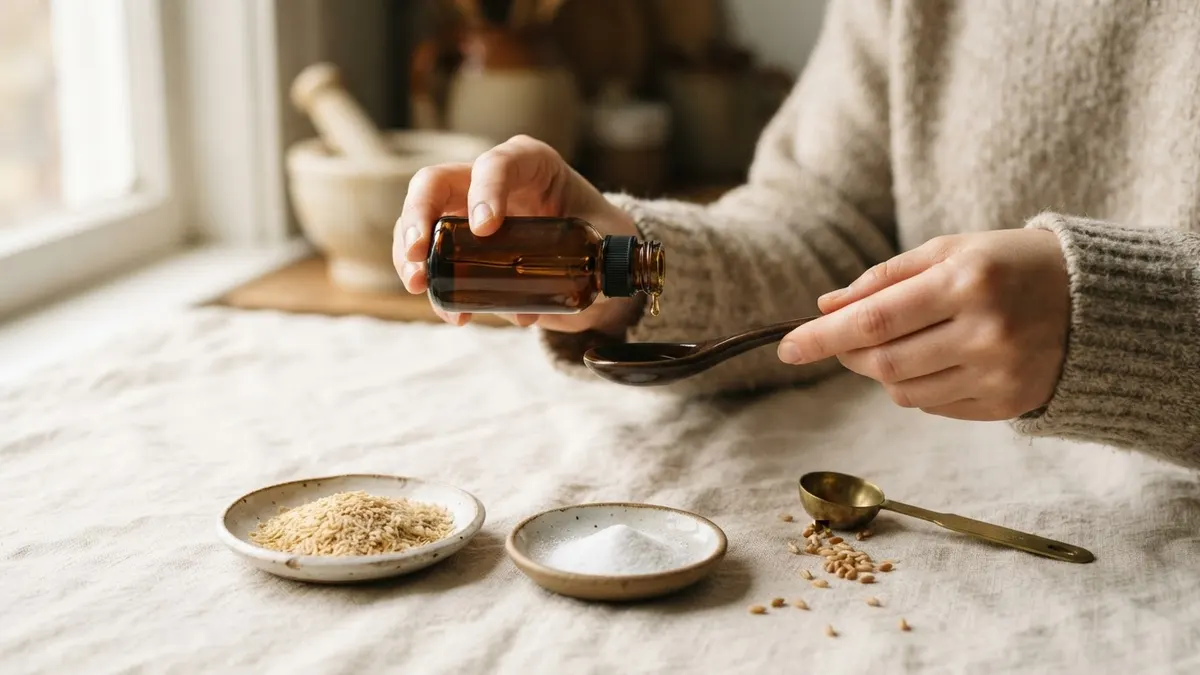
Wheat germ extract
Wheat germ is the small, nutrient-dense part of the wheat kernel. An extract concentrates it, and spermidine is one of many compounds inside. When you read a label like this, look for two separate numbers:
- The amount of extract per serving
- The amount of spermidine within that extract
A label that shows only the extract weight does not tell you how much spermidine you are taking. Because the source is wheat, also check whether the product says it is gluten-free if that matters to you.
Spermidine trihydrochloride
Spermidine trihydrochloride is spermidine in a salt form, bound to hydrochloride. Salt forms are a common way to supply a compound as a defined, measurable ingredient. On the label it is named directly, with an exact amount per serving.
One detail worth knowing: the stated weight of a salt form includes the hydrochloride part. So compare products form to form. If one bottle lists spermidine trihydrochloride and another lists wheat germ extract, their milligram numbers are not measuring the same thing.
| Type | What it is | Dose shown | Gluten note |
|---|---|---|---|
| Wheat germ | What it is Food-based extract with many compounds | Dose shown Varies; check for a spermidine figure | Gluten note Comes from wheat; check the label |
| Trihydrochloride | What it is Spermidine in a salt form | Dose shown Named, with exact mg per serving | Gluten note Check the label’s diet notes |
What else goes in the bottle?
Besides the active ingredient, every supplement has a few other ingredients that give it its form. Purewise’s two spermidine products are useful real examples, because both labels list them in full:
- Spermidine Capsules: rice flour, hypromellose (the capsule), silicon dioxide and magnesium stearate. Hypromellose forms the capsule shell, and the others are common helpers that let a fine powder fill capsules evenly. The capsules are non-GMO, gluten-free and soy-free.
- Spermidine Liquid Drops: glycerin, water and organic peppermint oil, with no artificial colors or flavors. Glycerin and water make the liquid base, and the peppermint oil gives the flavor.
Both Purewise formats use spermidine trihydrochloride as the single active ingredient. Nothing is tucked inside a blend: every ingredient and its amount is clearly declared on the Supplement Facts panel.
How is a spermidine supplement made?
In general terms, a spermidine supplement is made by preparing the active ingredient, checking it, measuring it into a capsule or a liquid, and testing the finished product before it is labeled. The steps look like this:
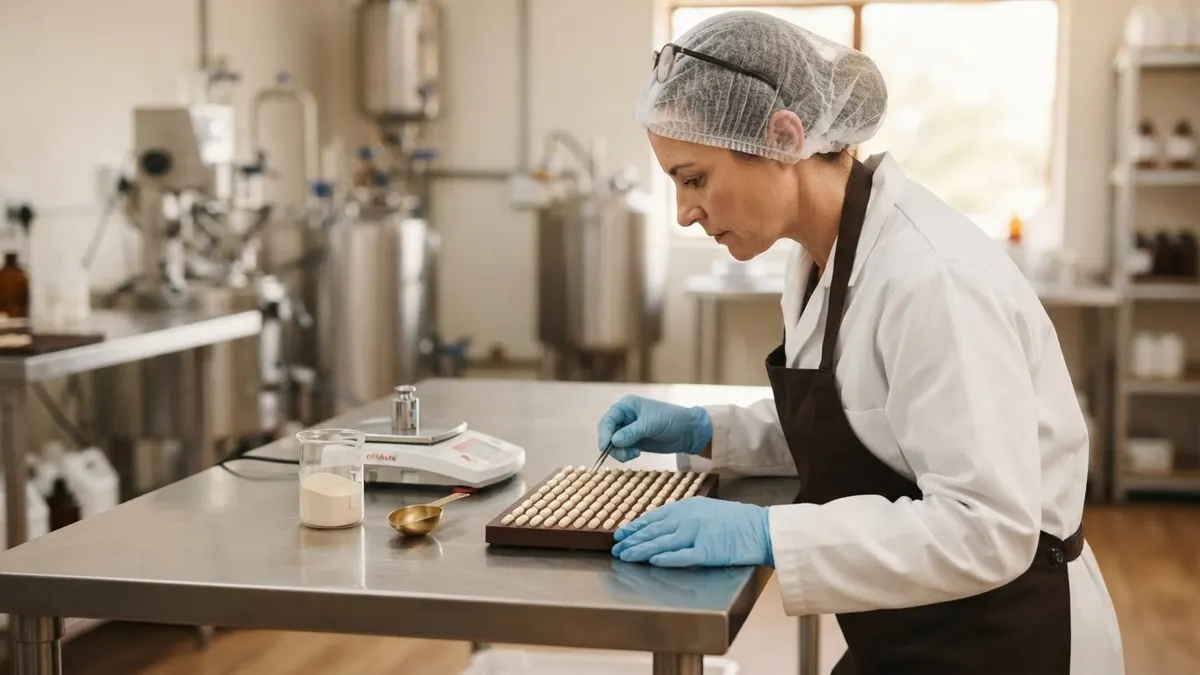
- Prepare the ingredient. A food extract is concentrated from plant material such as wheat germ. A purified ingredient such as spermidine trihydrochloride arrives as a defined compound with a known identity.
- Check it on arrival. Careful manufacturers confirm an ingredient is what it claims to be before it goes into production.
- Measure and form. For capsules, the ingredient is blended with its helpers and filled into shells. For drops, it is mixed into a liquid base with flavor.
- Test the finished product. Batches are checked for quality and purity.
- Label it. The Supplement Facts panel states the serving size, servings per container and the amount of each ingredient.
Why do the facility and testing matter?
They are how you know the bottle matches the label. cGMP stands for current Good Manufacturing Practice: rules for how supplements are produced, handled and recorded so each batch is made the same way. Independent testing adds an outside check.
According to the NIH Office of Dietary Supplements, a quality seal from an independent testing organization means the product was properly manufactured, contains the ingredients listed on the label and does not contain harmful levels of contaminants. It does not mean the product is safe or effective for you. That is a separate question, covered below.
Purewise products are made in the USA in a cGMP-compliant facility and are third-party tested for quality and purity, with the amount per serving printed on every label. You can read more about these standards on the About Purewise Naturals page.
What is the difference between spermine and spermidine?
Spermine and spermidine are close relatives in the same family of compounds, the polyamines, but they are different molecules. The simplest way to tell them apart is size: spermidine has three amine groups and spermine has four. In cells, a smaller polyamine called putrescine is built up into spermidine, and spermidine is built up into spermine.

| Compound | Amine groups | Place in family | On labels |
|---|---|---|---|
| Putrescine | Amine groups Two | Place in family Smallest; starting point | On labels Rarely the named ingredient |
| Spermidine | Amine groups Three | Place in family Middle; built from putrescine | On labels The usual healthy aging ingredient |
| Spermine | Amine groups Four | Place in family Largest; built from spermidine | On labels Less common as the named ingredient |
The names look alike, so they get mixed up in articles and search results. When you shop for a healthy aging supplement, the word to look for on the label is spermidine. It is the compound this guide is about, and it is the single active ingredient in both Purewise spermidine products.
What do spermidine supplements do? What research shows and what it does not
Spermidine supplements are taken to support healthy aging and cellular renewal as part of a daily routine. Spermidine is studied for its role in cellular renewal, the natural process cells use to clear and recycle worn-out parts. In science writing this process is often called autophagy, a word that means “self-eating”: the cell’s own cleanup and recycling system.
How should you read spermidine headlines?
Start by asking what kind of study a headline describes. Research on any supplement comes in layers, and each layer tells you something different:
- Lab studies look at cells in a dish. They can suggest how a compound might work, not what it does in a person.
- Animal studies show effects in a whole living body, but results in animals do not automatically apply to people.
- Diet studies over time compare what people eat with how they fare. They can spot patterns, but a pattern does not prove that one food or compound caused the result.
- Human trials give people a measured amount and track what happens. Small or short trials are a starting point, not the final word.
A useful rule of thumb: the further a claim sits from a well-run human trial, the more carefully you should read it.
What does research not show?
Spermidine is a dietary supplement, not a medicine. It does not replace care from your doctor, and any product sold to you as a fix for a disease deserves suspicion. Be just as careful with claims that promise a fast, visible change.
What about hair growth, hair loss and grey hair?
You may see spermidine linked to hair online. The research on hair is still early, and Purewise makes no hair growth, hair loss or grey hair claims for its spermidine products. If you have concerns about your hair, a healthcare professional is the best person to ask.
How does Purewise describe its spermidine?
Purewise spermidine products are designed to:
- Support healthy aging and everyday vitality
- Promote cellular renewal and resilience
- Support everyday cellular function
- Fit long-term, consistent daily use
Is spermidine good for you? Safety, side effects and who should check first
Spermidine is a natural part of your cells and your diet, and many people take it as a supplement to support healthy aging. Whether a supplement is right for you depends on your health, your medicines and your goals.
Keep one point from the NIH’s National Center for Complementary and Integrative Health in mind: “natural” does not necessarily mean safe. Some dietary supplements may interact with medicines or pose risks if you have medical problems or are going to have surgery. If something feels off after you start any supplement, talk with your healthcare professional.
Who should check with a healthcare professional first?
- Anyone who is pregnant or nursing
- Anyone taking medication
- Anyone with a medical condition
- Anyone planning surgery
Bring the bottle, or a photo of the Supplement Facts panel, to that conversation. A label that names the active form and the exact amount makes the discussion quick and specific.
What mistakes should you avoid?
- Expecting overnight results. This is long-term, everyday support. Consistency matters more than any single day.
- Buying a product that does not state its spermidine amount. If you cannot find the number, you cannot keep a steady routine.
- Taking more than the label says. The NIH Office of Dietary Supplements notes that taking more than you need can raise your risk of side effects. Follow the directions on your bottle.
- Believing hair claims or too-good-to-be-true promises. Measured language is a good sign; hype is not.
- Switching products every few weeks. Pick one clear label and one format you like, and stick with it.
How do you choose the best spermidine supplement? A label checklist
The best spermidine supplement for you is one with a clear label and a format you will keep taking. Use this checklist on any bottle:
- The active form is named. Look for spermidine trihydrochloride, or a stated spermidine amount if the product uses an extract.
- The amount per serving is printed. A clear number in milligrams, per serving, on the Supplement Facts panel.
- One active ingredient, fully declared. Every ingredient and amount is listed, with nothing hidden inside a blend.
- Made in a cGMP facility and third-party tested. This is your check that the bottle matches the label.
- Other ingredients and diet notes are listed. For example non-GMO, gluten-free or soy-free.
- A format you will actually use. Capsules or liquid drops, whichever fits your day.
For serving sizes and a full side-by-side of both Purewise formats, see the Spermidine Supplements: A Simple Guide.
How do you start a simple spermidine routine with Purewise?
Pick the format that suits you, take one serving a day, and keep it in the same spot in your day. Purewise offers spermidine two ways, each with spermidine trihydrochloride as the single active ingredient and 60 servings per bottle:
| Format | Daily serving | Per serving | Good for |
|---|---|---|---|
| Capsules | Daily serving 1 capsule | Per serving 60 mg | Good for A one-and-done habit |
| Liquid drops | Daily serving 1 mL | Per serving 40 mg | Good for Skipping capsules |
- Spermidine Capsules: one capsule a day with 60 mg of spermidine trihydrochloride. Non-GMO, gluten-free and soy-free.
- Spermidine Liquid Drops: 1 mL a day with 40 mg of spermidine trihydrochloride, flavored with organic peppermint oil, in a 2 oz bottle with a dropper. Take it directly or mix it into a small amount of water.
To make it stick, tie your serving to something you already do every day, such as your morning glass of water or brushing your teeth. Keep the bottle where you will see it. A routine you can keep beats a perfect one you forget.
If you have questions about either formula, Purewise customer service answers by email and by phone at +1 307 336 7873. You can also browse more ingredient guides in the Purewise Journal or see every formula in the shop.
Spermidine: questions
What is a spermidine supplement?
A spermidine supplement is a daily capsule or liquid that gives a clearly declared amount of spermidine per serving. Spermidine is a polyamine found naturally in the body’s cells and in many everyday foods, and it is studied for its role in cellular renewal.
What is a spermidine supplement made of?
Most are made from either a food-based extract, often from wheat germ, or spermidine trihydrochloride, a salt form of spermidine named on the label with an exact amount. Purewise uses spermidine trihydrochloride as the single active ingredient, with capsule helpers such as rice flour and hypromellose, or a liquid base of glycerin, water and organic peppermint oil.
What is the difference between spermine and spermidine?
They are related polyamines, but spermidine has three amine groups and spermine has four. In cells, spermidine is built up into spermine, and spermidine is the compound usually named on healthy aging supplements.
What do spermidine supplements do?
They are taken to support healthy aging and cellular renewal as part of a daily routine. Spermidine is studied for its role in cellular renewal, the process cells use to clear and recycle worn-out parts. It is everyday support, not a medicine.
Is spermidine good for you?
Many people take spermidine to support healthy aging, but whether it suits you depends on your health and medicines. Anyone pregnant, nursing, taking medication or with a medical condition should check with a healthcare professional first.
Do spermidine supplements help with hair growth or grey hair?
The research on spermidine and hair is still early. Purewise makes no hair growth, hair loss or grey hair claims for its spermidine products, and a healthcare professional is the best person to ask about hair concerns.
From the collection
Formulas in this guide
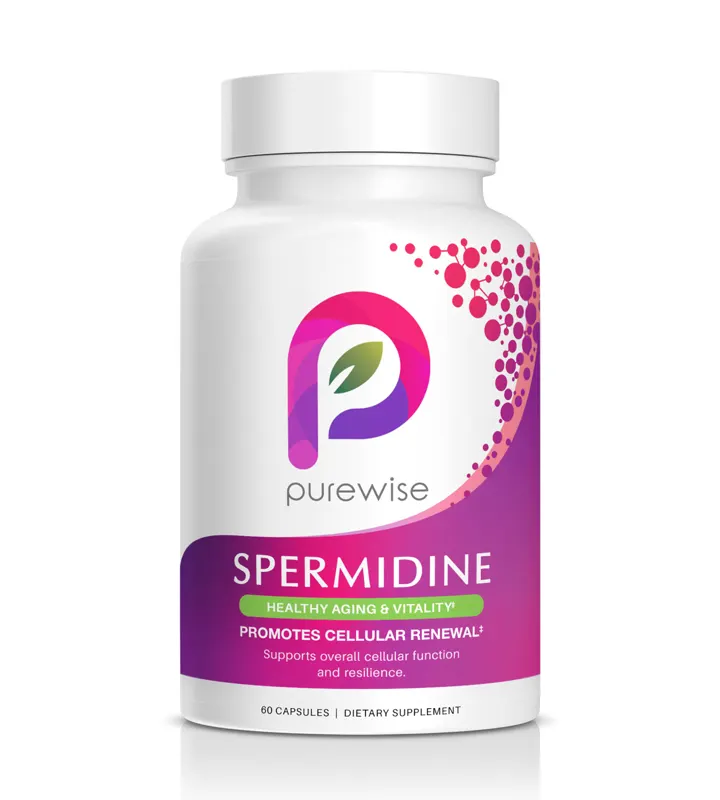
Capsules
Spermidine Capsules
60 mg per capsule Promotes cellular renewal.‡ Supports overall cellular function and resilience.
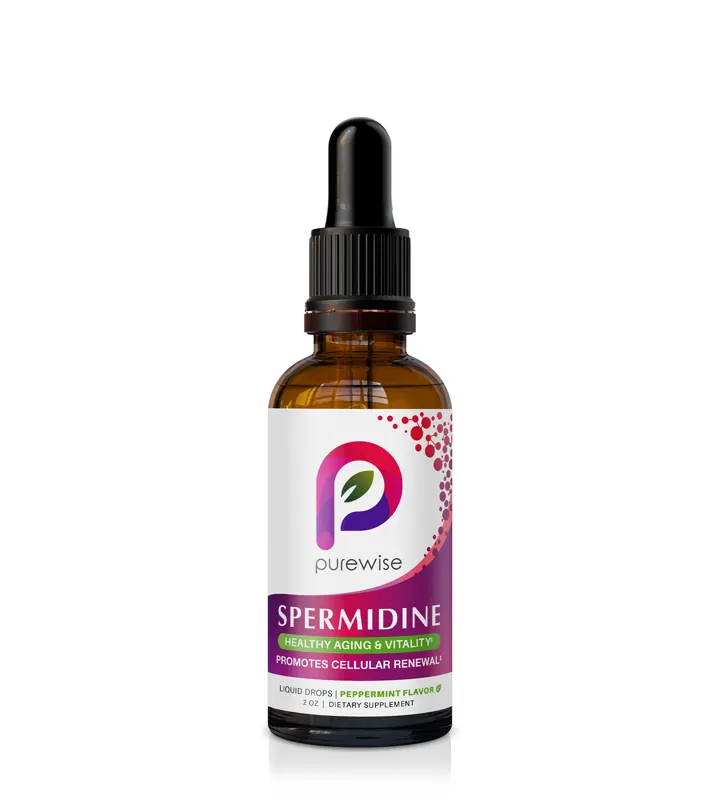
Liquid drops
Spermidine Liquid Drops
40 mg per 1 mL Promotes cellular renewal.‡ Peppermint flavor.
Start your ritual
Clean formulas, made for every day
Made in a cGMP-compliant facility and tested by an independent lab. Free standard shipping, and 30-day returns on unopened products.
Sources
- NIH National Center for Complementary and Integrative Health, Using Dietary Supplements Wisely
- NIH Office of Dietary Supplements, Dietary Supplements: What You Need To Know
- Purewise Naturals, Spermidine Liquid Drops
- Purewise Naturals, Spermidine Supplements: A Simple Guide
*These statements have not been evaluated by the Food and Drug Administration. These products are not intended to diagnose, treat, cure or prevent any disease. This article is general information, not medical advice.