


Quick answer
KSM-66 ashwagandha is good for supporting a healthy stress response, relaxation, sleep quality and steady focus as part of a daily routine. It is a branded extract made only from ashwagandha root and standardized to 5% withanolides, so each serving is consistent. Side effects are usually mild, but some people should check with a doctor first.

Key takeaways
- KSM-66 is a branded ashwagandha extract made only from the root.
- KSM-66 is standardized to 5% withanolides, naturally occurring compounds in ashwagandha.
- Research on ashwagandha has mostly looked at stress, anxiety and sleep, in studies of 6 to 8 weeks or more.
- Reported side effects of ashwagandha are usually mild, such as upset stomach, loose stools and drowsiness.
- People who are pregnant or breastfeeding, have a thyroid or autoimmune condition, or take regular medicines should talk to a doctor first.
In this guide
- What is ashwagandha KSM-66 good for? The short answer
- What is KSM-66® ashwagandha and how is it different from regular ashwagandha
- What does KSM-66 ashwagandha do in the body
- What have studies on KSM-66 looked at
- KSM-66 capsules vs. tablets, gummies and powders: which form makes sense
- What are the side effects of ashwagandha KSM-66
- Who should talk to a doctor before taking ashwagandha
- How to take KSM-66 ashwagandha daily: a simple routine
- Trying KSM-66 ashwagandha with Purewise Naturals
- Questions
What is ashwagandha KSM-66 good for? The short answer
KSM-66 ashwagandha is mainly used to support a healthy stress response, relaxation and sleep quality, and steady focus and mood as part of a daily routine. It is a branded, clinically studied extract made only from the ashwagandha root and standardized to 5% withanolides, so every serving is consistent. Think of it as everyday support. It is not a medicine for any condition.

That is the quick version. The rest of this guide explains what the name on the label means, what researchers have studied, which side effects to watch for, who should check with a doctor first, and how to build a simple daily routine you can keep.
What is KSM-66® ashwagandha and how is it different from regular ashwagandha?
KSM-66 is one specific, branded extract of ashwagandha root. It is not a generic powder. The difference comes down to three things: which part of the plant is used, how the extract is made, and how consistent each serving is.

Ashwagandha (Withania somnifera) is an evergreen shrub grown in parts of Asia, Africa and Europe. Its root has been used in the traditional Ayurvedic and Unani medicine systems of India as an adaptogen, a loose term for something that helps the body resist or adapt to stress, according to the NIH Office of Dietary Supplements.
What does the name “KSM-66” tell you?
When a label says only “ashwagandha”, it could mean ground root, a mix of root and leaf, or an extract of unknown strength. When a label says KSM-66, you know which branded extract is inside: a root-only extract standardized to 5% withanolides, with its potency clearly declared. That makes it easier to compare products and to know what the research on that extract refers to.
Why does root-only matter?
Most ashwagandha supplements use an extract of the root, but some use the root and the leaves, and the NIH Office of Dietary Supplements notes that the chemical make-up of root and leaf differs. Traditional use centers on the root. KSM-66 is a root-only extract, so you know which part of the plant you are getting. If a label does not say which part of the plant is used, ask about that before you buy.
What does “5% withanolides” mean?
Withanolides are naturally occurring compounds in ashwagandha. The NIH Office of Dietary Supplements says they are believed to be behind many of its proposed effects, though other compounds in the plant may play a part too. “Standardized to 5% withanolides” means every batch is made to the same declared level, with withanolides making up 5 parts in every 100. It is a marker of potency and of consistency from one serving to the next.
A higher percentage is not automatically better. What you want is a clear standard, a clearly declared amount per serving, and a known plant part.
How does KSM-66 compare with other kinds of ashwagandha?
| Type | Plant part | Standardized? | Added sugar | Dose clarity |
|---|---|---|---|---|
| KSM-66 capsule | Plant part Root only | Standardized? Yes, to 5% withanolides | Added sugar Check the other ingredients | Dose clarity Clear: mg of extract per serving |
| Generic powder | Plant part Often root, sometimes not stated | Standardized? Check the label | Added sugar Check the label | Dose clarity Depends on how carefully you measure |
| Gummies | Plant part Varies by brand | Standardized? Check the label | Added sugar Check the label | Dose clarity Varies; check the extract amount, not just the gummy weight |
What does KSM-66 ashwagandha do in the body?
Ashwagandha is traditionally used as an adaptogen, to help the body handle everyday stress. Research summarized by the NIH Office of Dietary Supplements suggests ashwagandha extracts may lower stress, anxiety and cortisol levels (cortisol is a stress hormone). Here is how people use it in daily life.

Stress response
Purewise describes its KSM-66 as supporting a healthy stress response. The goal is to feel a little less pulled around by a full inbox, a long commute or a packed schedule.
Evening wind-down
Many people make ashwagandha part of a nighttime routine. If your evenings feel restless and your mind keeps running after the lights go out, it may help support relaxation and sleep quality alongside good sleep habits like a regular bedtime and less screen time late at night.
Focus, mood and energy
Some people take it in the morning. Purewise describes its KSM-66 as supporting mood balance and helping maintain steady energy and focus. Keep expectations modest: NCCIH notes there is not enough evidence yet to draw conclusions about ashwagandha and cognitive function.
Keep these in perspective. They are general wellness uses; these statements have not been evaluated by the Food and Drug Administration, and ashwagandha is not a substitute for medical care.
What have studies on KSM-66 looked at?
Studies on KSM-66 and other ashwagandha extracts have mostly looked at stress, anxiety and sleep. The NIH Office of Dietary Supplements and the National Center for Complementary and Integrative Health (NCCIH) summarize this research; one sleep trial the Office of Dietary Supplements describes used KSM-66 itself, for 8 weeks.

- Stress and anxiety: in several studies, people who took ashwagandha for 6 to 8 weeks said they felt less stress and anxiety, and their stress hormone levels went down. Some studies found it worked better at 500 to 600 mg a day than at lower doses.
- Sleep: in a few small studies, people with trouble sleeping fell asleep faster, slept longer and woke up less often. The benefits were small and showed up most at 600 mg a day or more, taken for at least 8 weeks.
- Focus, memory and exercise: NCCIH says there is not enough evidence yet to draw conclusions about cognitive function or athletic performance.
What does a typical study look like?
In plain words: a group of adults is split in two. One half takes a daily serving of ashwagandha extract; the other half takes a dummy pill (a placebo) that looks the same. Neither the people nor the researchers know who is taking which. After several weeks, the two groups are compared.
What are the honest limits?
- Most studies are fairly small and short, running for weeks rather than years.
- Studies have used many different ashwagandha extracts and daily amounts.
- Long-term safety has not been studied as well as short-term use, a point both NCCIH and the Office of Dietary Supplements make.
That is one reason a branded extract is useful: when a label names KSM-66, you know which extract the product uses, instead of guessing.
KSM-66 capsules vs. tablets, gummies and powders: which form makes sense?
For most people, capsules are the simplest form of KSM-66 ashwagandha: the dose is measured for you. Whatever the form, read the label for the extract amount per serving and the other ingredients.
- Capsules: a measured dose, easy to keep on a counter or in a bag. You do need to swallow them.
- Tablets and pills: similar to capsules. Read the other ingredients.
- Gummies: check the label for added sugar and for the actual extract amount per gummy.
- Powders: you measure the dose yourself, so it is easier to be inexact.
A checklist for reading any KSM-66 label
- Does it say KSM-66 by name, not just “ashwagandha”?
- Is it root-only?
- Is it standardized, and to what percentage of withanolides?
- How many mg of extract are in one serving, and how many capsules make a serving?
- Is every amount clearly declared, with no hidden blends?
- What are the other ingredients, and what allergens does it list?
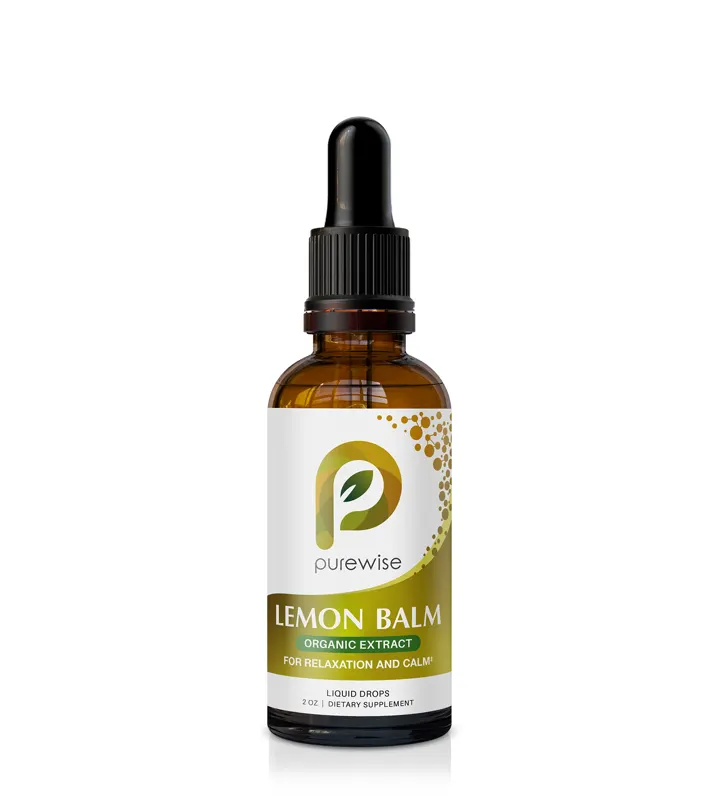
If you prefer liquid drops for an evening routine, note that ashwagandha and lemon balm are different herbs. Purewise offers Lemon Balm Extract Liquid Drops for relaxation and calm as a separate product; it is not a KSM-66 product.
What are the side effects of ashwagandha KSM-66?
The common side effects of ashwagandha are usually mild: upset stomach, loose stools, nausea and drowsiness, according to the Office of Dietary Supplements. NCCIH also lists diarrhea and vomiting. These are general to ashwagandha, not specific to one brand.
Both sources also note reports of liver injury linked to ashwagandha supplements. The Office of Dietary Supplements says ashwagandha extracts have been linked to liver injury in some people and that more research is needed. That is why it is worth taking warning signs seriously.
How can you lower the chance of side effects?
- Follow the directions on the label: for Purewise KSM-66 that is 2 capsules a day. Do not take more than the label serving.
- Drowsiness is one of the common side effects. If you notice it, talk to your doctor or pharmacist.
- Ashwagandha might interact with sedatives (medicines that make you sleepy), so ask your doctor before taking it with them.
When should you stop and call a doctor?
Stop taking it and talk to a doctor if you notice anything unusual or lasting. In the liver injury reports the Office of Dietary Supplements describes, the signs included yellowing of the skin or eyes (jaundice), itching, nausea, unusual tiredness and belly discomfort, and people got better over time after they stopped the supplement.
Allergen note
The Purewise KSM-66 Ashwagandha label lists Contains: Milk. If you have a milk allergy, talk to your doctor before taking it.
Who should talk to a doctor before taking ashwagandha?
Anyone who is pregnant or breastfeeding, has a thyroid or autoimmune condition, has hormone-sensitive prostate cancer, takes regular medicines or is about to have surgery should talk to a doctor before taking ashwagandha. NCCIH and the Office of Dietary Supplements name these groups, and the Purewise product page asks you to check with a healthcare professional first if you are pregnant, nursing, taking medication or have a medical condition.
- Pregnancy or breastfeeding: NCCIH says ashwagandha should be avoided during pregnancy and should not be used while breastfeeding.
- Thyroid conditions: ashwagandha may affect how the thyroid gland works, and it might interact with thyroid medicines.
- Autoimmune conditions: NCCIH does not recommend ashwagandha for people with autoimmune disorders.
- People taking medicines: sedatives, medicines that suppress the immune system, or medicines for diabetes, high blood pressure, thyroid conditions or seizures. Ashwagandha might interact with them.
- Liver problems: the Office of Dietary Supplements notes that some people in the liver injury reports already had liver disease, so mention any liver condition to your doctor.
- Upcoming surgery: NCCIH does not recommend ashwagandha for people who are about to have surgery.
- Hormone-sensitive prostate cancer: NCCIH says people with it should avoid ashwagandha.
- Milk allergy: see the allergen note above for the Purewise capsules.
A simple way to handle this: take a photo of the supplement facts panel and show it to your doctor or pharmacist with your list of current medicines.
How to take KSM-66 ashwagandha daily: a simple routine
The Purewise label serving is 2 capsules daily, taken at the time of day you are most likely to stay consistent. Consistency matters more than the exact hour.
Should you take it in the morning or the evening?
Pick what fits your goal and your day:
- Morning: if you want support for steady focus and calmer workdays, take it in the morning, for example alongside breakfast if that helps you remember.
- Evening: if you use it to wind down, take it in the evening as part of your nighttime routine.
How long should you give it?
Give it several weeks of daily use before deciding how it works for you. In several of the stress studies the Office of Dietary Supplements describes, people took it for 6 to 8 weeks, and in the sleep studies the small benefits were most noticeable at 600 mg a day or more, taken for at least 8 weeks. One good or bad day tells you very little.
In studies of up to about 3 months there were no safety concerns, but it is not clear whether ashwagandha is safe to use for longer, so talk to your doctor before taking it for months on end.
What mistakes should you avoid?
- Doubling up on a stressful day. Stay with the label serving.
- Switching products often. Different extracts and strengths make it hard to know what is working.
- Stopping after a few days because you did not feel a change right away.
- Ignoring the other ingredients and allergens, especially if you have a food allergy.
- Expecting it to replace sleep, movement and meals. It supports a routine; it does not replace one.
A small checklist to make it stick
- Keep the bottle where you start your day, next to the coffee maker or your toothbrush.
- Pair it with a habit you already have, like breakfast or brushing your teeth at night.
- Once a week, write one line about your sleep, stress and focus. After a few weeks you will see a pattern more clearly than you would from memory.
Trying KSM-66 ashwagandha with Purewise Naturals
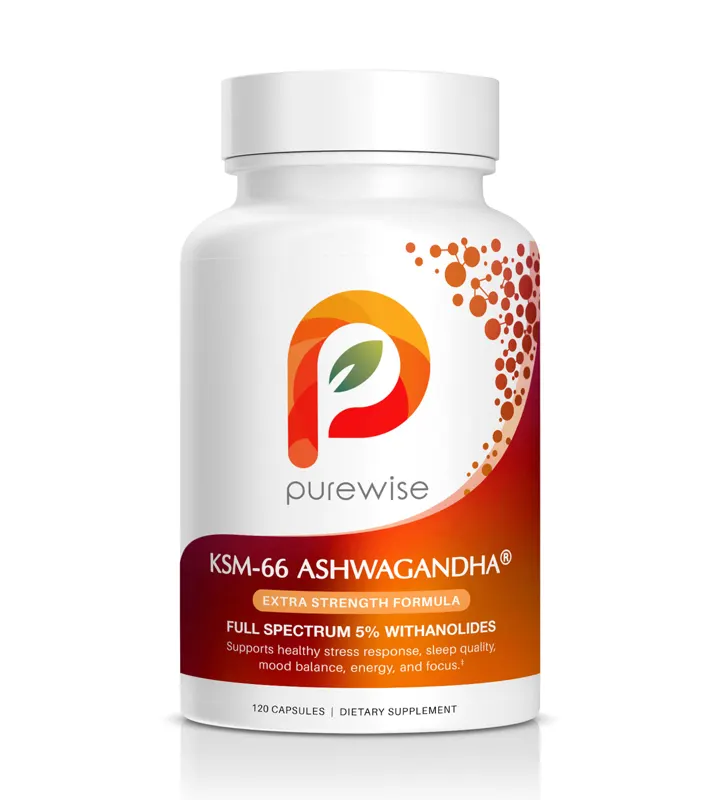
If KSM-66 sounds like a fit, here is what is in the Purewise KSM-66 Ashwagandha capsules and how they are made:
- 600 mg organic KSM-66 ashwagandha root-only extract per 2-capsule serving
- Standardized to 5% withanolides
- 60 servings per bottle (120 capsules)
- Other ingredients: organic tapioca maltodextrin, pullulan (capsule). Contains: milk
- Every amount clearly declared, with no hidden blends
- Made in the USA in a cGMP-compliant facility and third-party tested, as the product page states
You can learn more about how the brand chooses its ingredients on the About page, or see related products on the capsules page.
Your next step: read the supplement facts on the product page, check the other ingredients against your own needs, and if you take any medicine or fall into one of the groups above, show the label to your doctor or pharmacist before your first serving.
KSM-66 Ashwagandha: questions
What is KSM-66 ashwagandha?
KSM-66 is a branded, clinically studied ashwagandha extract made only from the root and standardized to 5% withanolides. Because it is one named extract standardized to 5% withanolides, each serving is consistent, instead of an unknown generic powder.
What is ashwagandha KSM-66 good for?
KSM-66 ashwagandha is mainly used to support a healthy stress response, relaxation and sleep quality, and steady focus and mood. These are general wellness uses, not claims about any disease.
What are the side effects of ashwagandha KSM-66?
Common side effects are usually mild: upset stomach, loose stools, nausea and drowsiness, according to the NIH Office of Dietary Supplements; NCCIH also lists diarrhea and vomiting. Liver injury linked to ashwagandha has been reported, so stop and see a doctor if you notice yellowing skin or eyes, itching or unusual tiredness. People who are pregnant or breastfeeding, have thyroid or autoimmune conditions, or take regular medicines should talk to a doctor before starting.
Are KSM-66 ashwagandha capsules made from the root or the leaf?
KSM-66 is a root-only extract. The Purewise KSM-66 Ashwagandha capsules use this root-only extract, following traditional Ayurvedic use of the root.
What does ‘5% withanolides’ mean on a KSM-66 label?
It means the extract is standardized so that 5% of it is withanolides, naturally occurring compounds in ashwagandha. The standard signals potency and consistency from one serving to the next.
What does organic ashwagandha mean?
Organic ashwagandha is grown and processed under organic certification rules rather than conventional farming methods. The Purewise KSM-66 Ashwagandha capsules contain 600 mg of organic KSM-66 ashwagandha extract per 2-capsule serving.
From the collection
Formulas in this guide
Liquid drops
Lemon Balm Extract Liquid Drops
Purewise Lemon Balm Liquid Drops provide 590 mg of organic lemon balm leaf extract per serving in a convenient liquid format.
Browse every formula by format: capsules or liquid drops, or read more guides in the Journal.
Start your ritual
Clean formulas, made for every day
Made in a cGMP-compliant facility and third-party tested, with every amount on the label.
Sources
- NIH Office of Dietary Supplements, Ashwagandha: Is it helpful for stress, anxiety, or sleep? (Health Professional Fact Sheet)
- NIH Office of Dietary Supplements, Ashwagandha (Consumer Fact Sheet)
- National Center for Complementary and Integrative Health (NCCIH), Ashwagandha
- Purewise Naturals, KSM-66 Ashwagandha
*These statements have not been evaluated by the Food and Drug Administration. These products are not intended to diagnose, treat, cure or prevent any disease. This article is general information, not medical advice.