


Quick answer
To increase cellular energy, keep the daily basics steady: regular sleep times, enough sleep, regular exercise, well-balanced meals and water through the day. Your mitochondria turn sugar and oxygen into ATP, the energy your cells run on. A supplement can be added later, but it does not replace these habits.

Key takeaways
- Mitochondria turn sugar and oxygen into the energy cells need.
- ATP is the cell’s main energy source.
- Enough sleep, a well-balanced diet, water and regular exercise are listed ways to reduce fatigue.
- Tiredness that does not improve with rest is a reason to see a healthcare provider.
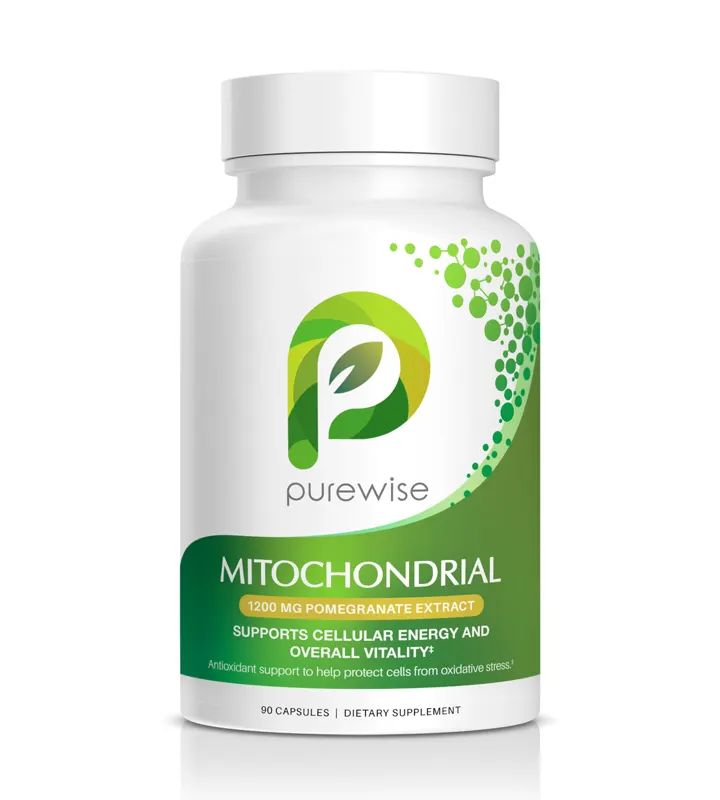
- Purewise Mitochondrial Capsules hold 1,200 mg of pomegranate extract (20% punicalagins) per 3-capsule serving.
In this guide
- What is cellular energy
- How do cells produce energy? ATP and mitochondria made simple
- Why can your cellular energy dip
- How can you improve mitochondrial function naturally? Your daily habits checklist
- Which common mistakes drain your energy
- Where does a supplement for cellular energy fit in your routine
- How to increase cellular energy: what does a simple 4-week plan look like
- What is your next step
- Questions
Learning how to increase cellular energy starts with the basics your cells run on: regular sleep, steady movement and balanced meals, kept up day after day. Cellular energy is the usable fuel your cells make from food and oxygen, mostly as a small molecule called ATP. A supplement can sit on top of those habits. It does not replace them.
This guide explains how your cells make energy in plain words. It then gives you a daily checklist and a 4-week plan you can start tonight, and shows where a supplement fits once the habits are in place.
What is cellular energy?
Cellular energy is the energy each of your cells makes and spends to do its work, from moving a muscle to sending a nerve signal. Most of it is made inside mitochondria. These are tiny parts of almost every cell in your body, often called the powerhouse of the cell, and they turn sugar and oxygen into the energy cells need.

The form your cells actually spend is ATP (adenosine triphosphate), the cell’s main energy source. A simple way to picture it: food is the raw fuel, and ATP is the charged battery your cells can plug straight into.
You cannot feel ATP directly, and you cannot measure it at home. What you can control are the daily inputs that feed the process: when you sleep, how much you move, what you eat and how you handle stress.
How do cells produce energy? ATP and mitochondria made simple
Cells produce energy by breaking food down and using oxygen to turn it into ATP, and most of that work happens in the mitochondria. Scientists call the main part of this process oxidative phosphorylation, but you only need the simple version.

A simple diagram of cellular energy production
- In: sugars and fats from the food you eat, plus oxygen from the air you breathe.
- Inside the cell and its mitochondria: the fuel is broken down step by step, and its energy is captured.
- Out: ATP for your cells to use, plus water and carbon dioxide, which you breathe out.
What are the three steps, in plain words?
- Breaking down: in the main body of the cell, sugar is split into smaller pieces. This first step makes only a little ATP.
- The processing cycle: inside the mitochondria, those pieces go around a repeating cycle that strips off energy-rich particles called electrons.
- The assembly line: on the inner wall of the mitochondria, a chain of proteins passes those electrons along and uses oxygen to build most of the cell’s ATP.
Where does NAD+ come in?
NAD+ is a helper molecule that works like a delivery van. It picks up electrons during the breakdown and cycle steps, drops them off at the assembly line, and goes back for more. That shuttle job is why NAD+ comes up so often when people talk about mitochondria.
Why does this matter day to day?
Your cells keep remaking ATP all day rather than storing a big reserve. So a steady supply of fuel, oxygen and rest matters more than any one-time boost. That is also why small habits repeated daily tend to beat dramatic changes you only keep up for a week.
Why can your cellular energy dip?
Most everyday dips come back to the inputs: sleep, activity, food and stress. Fatigue can be a normal response to physical exertion, emotional stress, boredom or lack of sleep.
Before you change anything, spend three days noticing your own pattern. Ask yourself:
- Sleep: did I get enough sleep, and did I go to bed and wake up at roughly the same time?
- Exertion: did I overdo it, or did I barely move all day?
- Food and water: were my meals well balanced, and did I drink water through the day?
- Stress: was it a tense day with no time to unwind?
- Alcohol and nicotine: did either play a part last night or today?
Most people find one or two clear patterns. Start there, not with everything at once.
When should you see a healthcare professional?
Tiredness has many possible causes, and some are medical. If your tiredness does not get better with rest, keeps going for weeks, or comes with other symptoms, talk to a healthcare provider. Habits and supplements are not a substitute for a proper check-up.
How can you improve mitochondrial function naturally? Your daily habits checklist
The natural approach is the basics, done consistently: enough sleep, regular exercise, well-balanced meals, water through the day and a reliable way to relax (for one option, see our simple guide to KSM-66 ashwagandha for stress and sleep). These are the same everyday steps health guidance lists for reducing fatigue. Here is how to turn them into a routine.
Sleep
- Pick a bedtime and a wake time and keep them within the same half hour, weekends included.
- Give yourself enough time in bed to get enough sleep, not just whatever is left after the evening.
- Build a short wind-down: dim the lights, put the phone away, read or stretch.
Movement
- Aim for 150 minutes of moderate activity a week, such as brisk walking. Thirty minutes on five days covers it, and you can split a day into shorter walks.
- Add muscle-strengthening activity on two days a week: bodyweight squats, push-ups against a counter, resistance bands or weights.
- Break up long stretches of sitting. Stand, walk to refill your water, or take calls on your feet.
Food and water
- Eat well-balanced meals. A practical plate: a palm-sized portion of protein, half the plate vegetables or fruit, a portion of whole grains and some healthy fat such as olive oil or nuts.
- Rotate colorful plants through the week: berries, leafy greens, peppers, pomegranate seeds.
- Keep a water bottle where you can see it and drink through the day, not all at once in the evening.
Stress and daily rhythm
- Choose one way to relax and give it five minutes daily: slow breathing, a short walk or a few stretches.
- Keep your workload and personal schedule realistic. A packed calendar with no breaks shows up as tiredness.
- Cut back on alcohol and nicotine.
Your 7-day yes or no checklist
Copy this into a notebook or your phone and tick each line every day for one week. The goal is not seven perfect days. It is seeing which habits you already keep and which one to work on next.
| Habit | Daily target | Done? |
|---|---|---|
| Sleep times | Daily target Same bedtime and wake time | Done? Yes / No |
| Movement | Daily target About 30 minutes of brisk activity | Done? Yes / No |
| Sitting breaks | Daily target Stand up at least once an hour | Done? Yes / No |
| Balanced meals | Daily target Protein and plants at each meal | Done? Yes / No |
| Water | Daily target Bottle refilled through the day | Done? Yes / No |
| Unwind | Daily target Five calm minutes | Done? Yes / No |
| Alcohol check | Daily target None, or less than usual | Done? Yes / No |
Which common mistakes drain your energy?
The biggest mistake is reaching for a shortcut instead of fixing the inputs. These are the ones to watch for:
- Using extra coffee or energy drinks to cover short sleep. They change how tired you feel for a few hours, but the missing sleep is still missing.
- Going from no exercise to hard workouts every day. Most people who do this stop within a couple of weeks. Build up gradually so you are still moving next month.
- Skipping meals or crash dieting. Your cells make energy from the food you eat. Long gaps and very low intake leave less to work with.
- Expecting a supplement to make up for missing sleep, movement or food. A supplement is a small add-on to a routine, not the routine itself.
- Starting several products or changes at once. If you change five things on Monday, you cannot tell which one helped. Make one change at a time and give each a fair run.
Where does a supplement for cellular energy fit in your routine?
A supplement fits after the habits, as one small, consistent step in a routine you already keep. If your sleep, movement and meals are steady, a supplement with a clearly declared dose is easy to add and easy to track.
What are pomegranate extract and punicalagins?
Pomegranate extract is a concentrated form of the fruit. Punicalagins are a group of plant compounds found in pomegranate. When an extract is standardized, the label tells you how much of it is made up of those compounds, so you know what each serving holds. Purewise Mitochondrial Capsules state 1,200 mg of pomegranate extract per serving, standardized to 20% punicalagins.
How do Purewise’s two cellular energy formulas compare?
Purewise groups two formulas under cellular energy. Here is what each label states:
| Formula | Per serving | Format | Label says |
|---|---|---|---|
| Mitochondrial Capsules | Per serving 1,200 mg pomegranate extract (20% punicalagins) | Format 3 capsules; 30 servings per bottle | Label says “Supports cellular energy and overall vitality.”‡ |
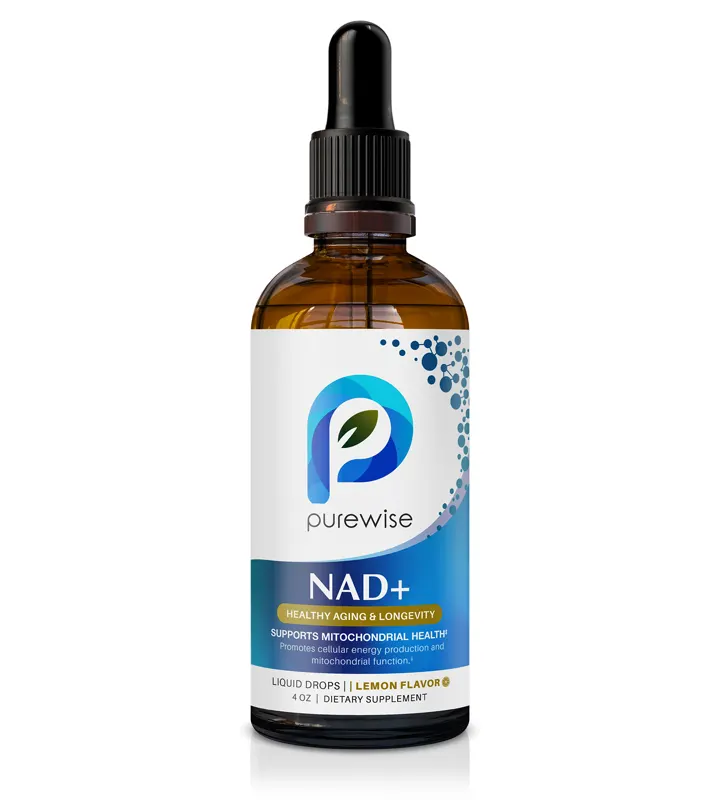
| NAD+ Liquid Drops | Per serving 400 mg per 4 mL | Format Lemon-flavored liquid drops | Label says “Supports mitochondrial health.”‡ |
Capsules suit people who like a fixed, one-step habit. Liquid drops suit people who prefer not to swallow capsules; they can be taken straight or stirred into water, tea or juice. See the full Supplement Facts on the Mitochondrial Capsules and NAD+ Liquid Drops pages.
How do you choose any supplement for cellular energy?
Whatever brand you look at, use this short checklist:
- The amount per serving is printed for every active ingredient.
- The extract strength is stated, for example a standardization percentage.
- Nothing is hidden in an undisclosed mix; you can read exactly what one serving holds.
- It is made in a cGMP facility and third-party tested for quality and purity.
- The directions are simple enough that you will actually follow them every day.
If you are pregnant, nursing, taking medication or have a medical condition, check with your healthcare professional before starting any supplement. Always follow the directions on your bottle.
How to increase cellular energy: what does a simple 4-week plan look like?
A realistic plan adds one layer each week, so every new habit lands on top of one you already keep.
- Week 1: sleep and walking. Set your bedtime and wake time and keep them every day. Add a daily walk of about 20 minutes, and build toward 30.
- Week 2: meals and water. Add protein and a colorful plant to every meal. Keep a water bottle within reach.
- Week 3: strength and unwinding. Add two short strength sessions, 15 to 20 minutes each. Add five calm minutes in the evening.
- Week 4: review. Look back at your checklist. Which days felt better, and what did they have in common? If you choose to, add one supplement at a time, taken at the same time each day, so you can tell how it fits.
Why does consistency beat perfect days?
Your cells keep making energy around the clock, so they respond to what you do most days, not what you do on your best day. Five decent days a week is a better result than two perfect days followed by a crash. If you miss a day, pick the checklist back up the next morning. That is the whole skill: an easy routine you keep, rather than a perfect one you drop.
What is your next step?
Start with one habit tonight: set the bedtime you will keep this week. Next, print or copy the 7-day checklist. When your routine feels steady, read the Supplement Facts on the Mitochondrial Capsules page, or browse all Purewise supplements. For more ingredient guides, visit the Purewise Journal. Questions about a formula? Customer service answers by email and by phone.
Cellular energy: questions
What is cellular energy?
Cellular energy is the energy your cells make and use to do their work, mostly in the form of a molecule called ATP. Most of it is made in mitochondria, tiny parts of almost every cell that turn sugar and oxygen into the energy cells need.
How do cells produce energy?
Cells break down food and use oxygen to turn it into ATP, the cell’s main energy source. Most of this happens inside the mitochondria, in a process called oxidative phosphorylation.
What daily habits support cellular energy?
Getting enough sleep, eating well-balanced meals, drinking water through the day, exercising regularly and making time to relax are the everyday basics. Cutting back on alcohol and nicotine also helps reduce fatigue.
Where does a supplement fit in a cellular energy routine?
A supplement fits after the habits, as one small, consistent step in a routine you already keep. It is not a replacement for sleep, movement or balanced meals.
What is a good supplement for cellular energy?
Look for one with the amount per serving printed, the extract strength stated, nothing hidden, and testing by a third party. Purewise Mitochondrial Capsules hold 1,200 mg of pomegranate extract standardized to 20% punicalagins per 3-capsule serving, and the label reads “Supports cellular energy and overall vitality.”‡
Can I take pomegranate extract and NAD+ drops together?
Ask your healthcare professional before combining supplements, especially if you are pregnant, nursing, taking medication or have a medical condition. If you do add them, start one at a time so you can tell how each fits your routine.
From the collection
Formulas in this guide
Capsules
Mitochondrial Capsules
1,200 mg pomegranate Supports cellular energy and overall vitality.‡
Start your ritual
Clean formulas, made for every day
Made in a cGMP-compliant facility and tested by an independent lab. Free standard shipping, and 30-day returns on unopened products.
Sources
- MedlinePlus (U.S. National Library of Medicine), Mitochondrial Diseases
- MedlinePlus Genetics (U.S. National Library of Medicine), Mitochondrial DNA
- MedlinePlus (U.S. National Library of Medicine), Fatigue
- MedlinePlus (U.S. National Library of Medicine), Healthy Sleep
- Centers for Disease Control and Prevention, Adult Activity: An Overview
- Purewise Naturals, Mitochondrial Capsules, Pomegranate 1,200 mg
*These statements have not been evaluated by the Food and Drug Administration. These products are not intended to diagnose, treat, cure or prevent any disease. This article is general information, not medical advice.